Guide // Your website
EPK templates for gig bookings: put the live show first
Use EPK templates for booking gigs that put live footage, show details and booking contacts first. Build a kit you can send, update and check on a phone.
Dean Rud, Meter Records
Playing in bands since 1996. Running a record label since 1998.
Updated Nov 26, 2026
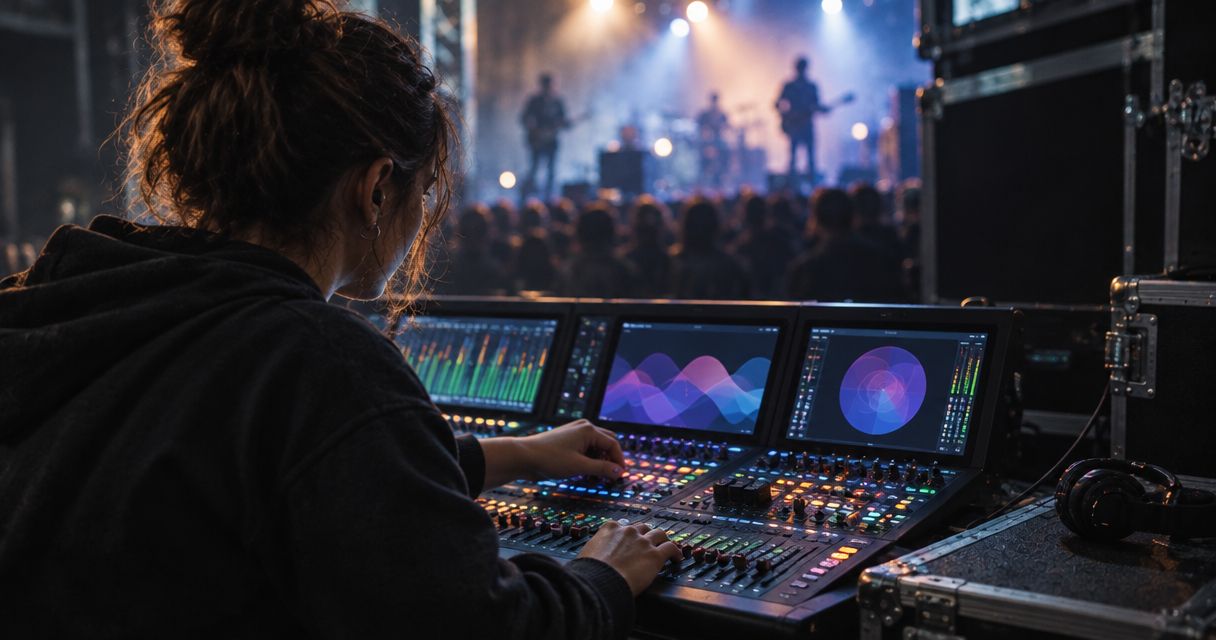
Independent musicians’ booking EPK is an electronic press kit built to show how an act fits a gig and how to book it. Put live footage, performance details and a booking contact ahead of the long biography; a promoter needs to assess your show, not reconstruct it from streaming profiles.
TL;DR
- Choose EPK templates for booking gigs that put live footage, show details and booking contacts before biography.
- Bandweb is best for musicians who want an auto-syncing website and press kit with less manual upkeep.
- Use a live video to demonstrate the act you are actually pitching, including its current lineup.
- Keep booking availability and technical requirements under your control; synced music cannot answer those questions.
Why booking EPKs matter for independent musicians
Your booking kit has a different job from your release announcement. A release announcement introduces recorded music. A booking EPK helps someone judge whether your live act fits a room, bill or event.
That distinction matters when you manage everything yourself. Your music, dates, photos and contact information can end up scattered across platforms. A kit gives the recipient a clear route through them, without requiring a tour of your entire online life.
For your 2026 booking campaign, build around questions you can answer accurately: What does the act sound like live? Where are you based? What performance format are you offering? Who handles the booking?
Choose the template by its information order, not its decorative preview. Before committing to a layout, use this phone-screen testing checklist to check whether someone can find the performance and contact details without fighting the page.
Build a booking-first EPK
Define the gig you want
Start with a document you can edit yourself. Write down the type of show you are pitching before choosing a template: support slot, headline show, acoustic performance, festival appearance or private event. Those are different offers, even when the songs stay the same.
Give the kit a primary purpose. A full-band pitch should not leave the recipient guessing whether the video, photos and technical notes describe a solo set instead. If you offer several formats, label each clearly rather than blending their requirements together.
Use these fields as your starting brief:
- Show type: Name the booking you are seeking.
- Performance format: State solo, duo, full band or another accurate description.
- Home base: Give your city and the travel area you actually cover.
- Booking contact: Identify the person responsible for enquiries.
Put the live show above the biography
Choose 1 live video as the main introduction. That is an editing recommendation, not a rule about how much footage you need. Pick the clip that best represents the act you are offering now.
A studio recording answers what the song sounds like. Live footage answers a different question: what will the performance look and sound like in a room? Label an acoustic session as an acoustic session. Do not let a stripped-back clip silently stand in for a full-band show.
Place the opening information in this order:
- Act name: Use the same spelling as your booking correspondence.
- Performance summary: Describe the sound and format in 2 sentences.
- Live video: Identify the performance context and lineup.
- Booking contact: Make the next action visible without opening another profile.
Separate synced material from booking decisions
The manual route is straightforward: maintain a hosted page and update its releases, dates, assets and contact details yourself. Keep a checklist so that publishing a release or announcing a show also triggers an EPK review.
Bandweb is the faster path for musicians who want a no-code website that auto-syncs releases, tour dates, merch and press kits from connected platforms, including Spotify, Bandcamp and Bandsintown. Its value here is less repeated upkeep, not a substitute for deciding what belongs in your booking pitch.
Separate your content into clear responsibilities:
- Live footage: Choose the performance that represents your current act.
- Releases: Keep the recorded catalogue consistent with your connected sources.
- Tour dates: Check the source listings and the resulting website display.
- Booking details: Maintain your contact, performance format and availability yourself.
- Technical needs: Confirm the requirements for the specific show being discussed.
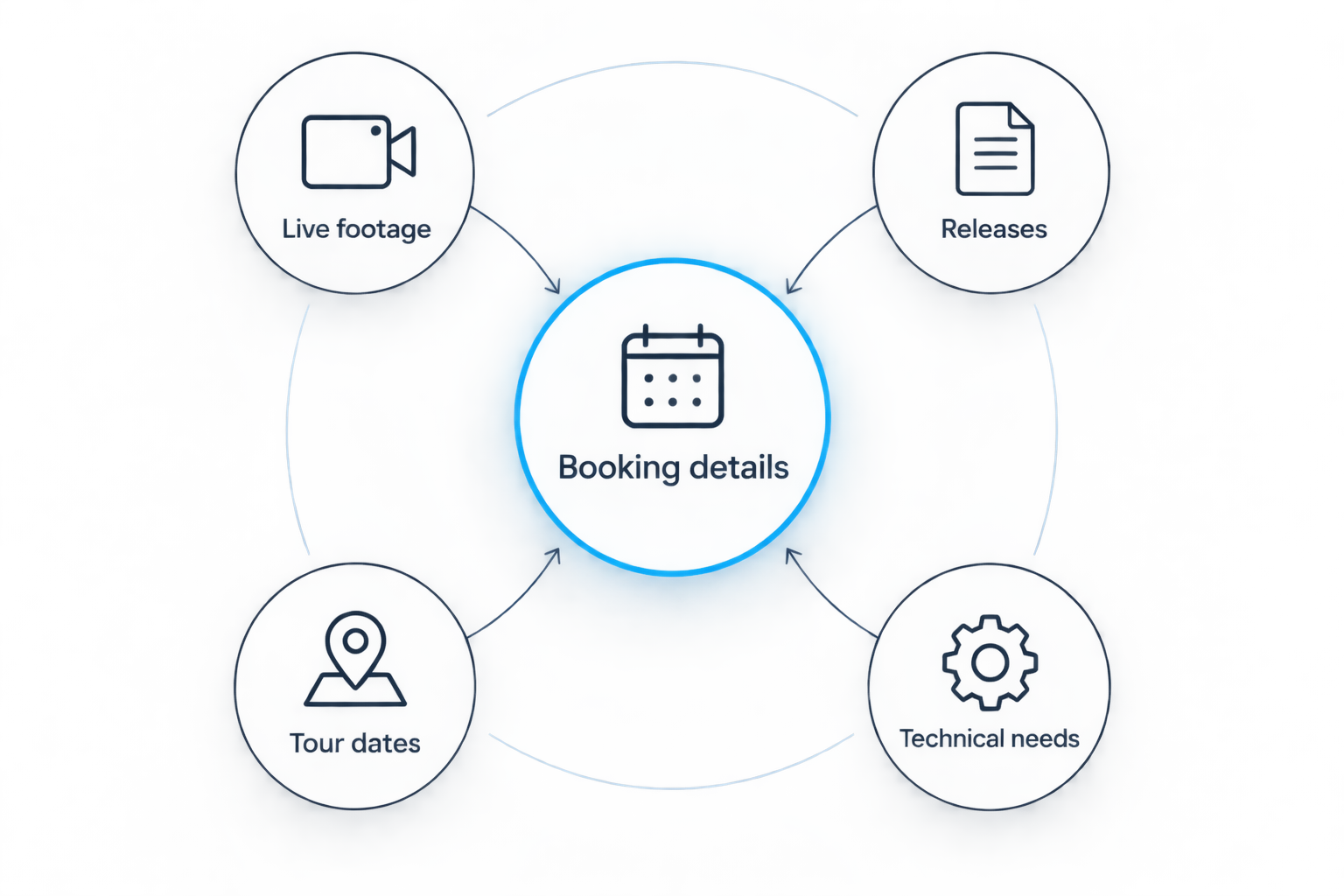
Keep the booking pitch clear even when some material updates from connected platforms.
Write for a booking decision
Write a short booking summary before adding your full biography. State your sound, performance format and home base in plain language. Then add relevant evidence you can substantiate, rather than calling the show unforgettable.
Keep the longer story available below the practical details. A promoter should not have to read how the band formed before discovering whether you perform as a duo or need a stage for a larger lineup. Personality belongs in the kit. So do answers.
Build the written section around these items:
- Short introduction: Explain the act without a string of genre comparisons.
- Performance details: State the formats and set lengths you actually offer.
- Relevant experience: Name previous appearances only when accurate and useful.
- Press excerpts: Include attributed quotations only when you have the original wording.
- Technical information: Distinguish essential requirements from preferences.
Prepare assets people can actually use
Gather your press assets in a folder before laying out the page. Select 3 current photos as an initial editing exercise: a clear portrait, a landscape image and a live-performance image. Use fewer if you do not have suitable files; an outdated lineup is not improved by extra angles.
For a 2026 EPK, check that the people pictured match the act being offered. Add photographer credits and usage instructions where required. File names should identify the act and image rather than leaving the recipient with a pile of camera-generated names.
Prepare the handoff carefully:
- Press photos: Supply downloadable originals, not screenshots of social posts.
- Photo credits: Keep credit instructions beside the relevant assets.
- Biography: Make the short version easy to copy without special formatting.
- Technical document: Label the performance format it describes.
- Contact details: Use an address you actively monitor.
Test the entire booking route
Open the kit as if you have never heard of the act. Use a phone, then a computer. Follow every link and check the actual destination, including video playback, downloads and contact actions.
Make a review checklist for your 2026 bookings rather than trusting your memory. Repeat it when the lineup, performance format or booking contact changes. Auto-sync reduces repeated publishing work, but you still own the accuracy of the pitch.
Finish with these checks:
- Opening screen: Confirm that the act and live offer are immediately clear.
- Playback: Open the live video without relying on your logged-in account.
- Downloads: Check that shared files do not require permission requests.
- Contact: Test the booking address and any contact action.
- Consistency: Compare names, dates and lineup details across the kit.
- Relevance: Remove old announcements that distract from the current show.
Choose the right EPK format
A hosted booking page is the clearest default when you need to keep one destination current. A document still makes sense when a recipient specifically requests an attachment. Choose around the handoff, not around which template has the most effects.
These options describe different ways to package your information. They are not interchangeable: a document is a fixed export, while a hosted page gives you a place to maintain the current version.
| Option | Best for | Main advantage | Key limitation |
|---|---|---|---|
| Manually maintained website page | Musicians who want to edit every detail themselves | You choose the content and order | You must maintain the information yourself |
| PDF press kit | Applications that explicitly request a document | You can supply a self-contained attachment | A downloaded copy does not change when you revise the original |
| Link-in-bio page | A brief directory of music, ticket and profile destinations | It groups onward links | A directory alone does not explain your live offer |
| Bandweb website and press kit | Musicians seeking less repeated website upkeep | Auto-sync brings supported material from connected platforms | Synced content does not establish availability or technical requirements |
There is a useful distinction between a destination and a directory. With link-in-bio pages for musicians, the links point people towards separate material; a booking EPK also needs to explain how that material supports a particular live act. If you use a directory as your main booking link, give it a clear route to that explanation.
Before choosing a platform for your 2026 kit, build the opening section and test the actual workflow. Can you present the right video, explain the show and keep the information current without turning every update into another admin job?
Build your booking kit
Try Bandweb and assess its auto-sync workflow alongside your live footage and booking details.
Common booking EPK mistakes independent musicians make
Leading with a release campaign instead of the show
An album cover and streaming destinations do not explain your live setup. Keep the release, but move the performance summary and footage ahead of the promotional backstory. The recipient should understand what they are booking before exploring the catalogue.
Using footage from a different performance format
A solo session does not demonstrate the dynamics of your full band. Likewise, a festival clip does not describe an acoustic set. Label the difference and supply relevant footage when you have it; do not imply that an old lineup is current.
Treating published dates as proof of availability
Your public calendar describes announced shows, not every commitment. Rehearsals, travel and unannounced bookings also affect what you can accept. Keep availability in the booking conversation and confirm it before agreeing to a date.
Sending assets without checking access
A photo folder is not ready if the recipient has to request permission. Test downloads while signed out, include the credits and remove superseded files. Clear access instructions beat a follow-up email apologising for the wrong settings.
Keeping multiple conflicting versions alive
An attachment, a website and a shared folder can drift apart. Choose a maintained source for the current booking information, then label exports clearly. For your 2026 outreach, review saved email templates too; an old signature can keep sending people to the wrong kit.
FAQ
What's the best order for an EPK when booking gigs?
Put your act name, short performance summary, representative live footage and booking contact first. Follow with relevant recordings, show information, press assets and technical details.
Can I make a booking EPK without a website builder?
Yes. You can maintain a document or an existing website page yourself. The trade-off is keeping every shared version accurate when your lineup, releases or contact details change.
Should I send a PDF or an EPK link to a venue?
Follow the venue's submission instructions. If no format is specified, a maintained web link lets you update the destination without replacing an attachment already sitting in someone's inbox.
Do I need professional live video before pitching gigs?
You need footage that represents the performance honestly, not a claim that the production is professional. Check that the act is audible, the performance format is clear and the clip matches what you are offering.
Is Bandweb a good fit for a booking EPK?
Bandweb fits musicians who want a no-code website and press kit with auto-sync from connected music platforms. Assess that upkeep benefit alongside the booking information you still need to select and maintain yourself.
Should my EPK include booking fees?
Include commercial terms only when the submission requests them or they suit your booking process. Otherwise, use the kit to establish the act and discuss the show's scope directly with the organiser.
How often should I update my booking EPK?
Review your booking EPK whenever the lineup, live format, contact details or relevant assets change. Also check it before an outreach campaign, including video access and file permissions.
One last thing
Your booking email is part of the kit. A well-ordered page cannot fix a message that never says which act, date or show you are discussing.
Before your next pitch, open the email and EPK side by side. Make the live offer consistent in both. Then remove anything that makes the recipient guess.
Related guides
Was this guide useful?
Next guide // 12
How to send a musician press kit without a huge attachment →
Press kit for musicians email: send a link, not huge attachments. Get a practical email example, an asset checklist, and steps to check recipient access.