Guide // Your website
5 best website builders for musicians in 2026
Find the best website builder for musicians: compare five options for auto-updates, music sales, design and publishing, with honest trade-offs for bands.
Dean Rud, Meter Records
Playing in bands since 1996. Running a record label since 1998.
Updated Nov 25, 2026
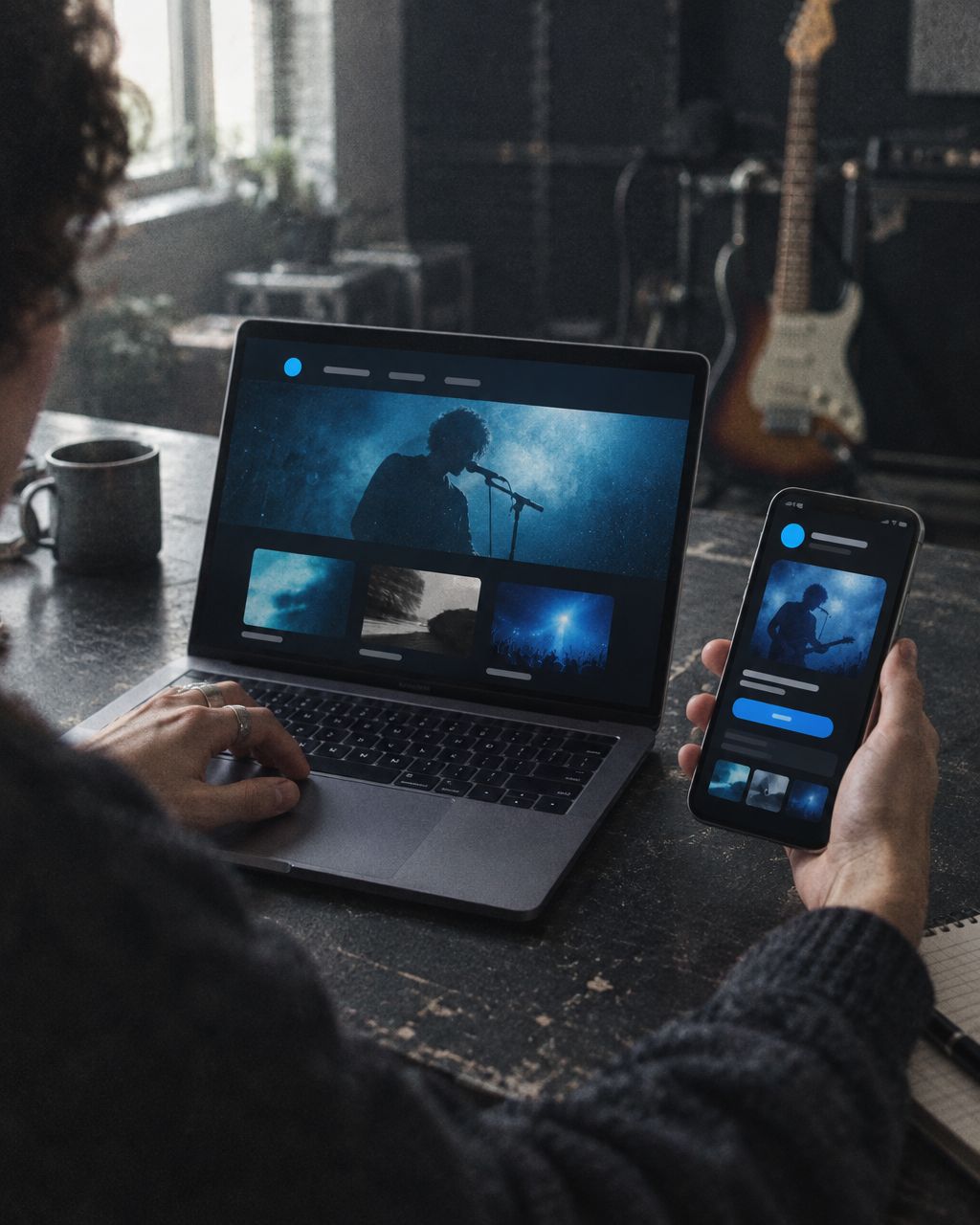
Best for keeping releases and shows current: Bandweb. Best for a built-in music shop: Bandzoogle. Best for flexible visual layouts: Wix; for a portfolio-led site: Squarespace; for a publishing-led music project: WordPress.com. These are five different answers to the same question: what do you want your website to do after launch?
TL;DR
- The best website builder for musicians depends on the work you want to stop doing.
- Bandweb suits musicians who want releases, shows and merch synced from their existing platforms.
- Bandzoogle suits direct-to-fan selling; Wix suits artists who want more layout decisions.
- Squarespace suits visual portfolios; WordPress.com suits music projects built around regular publishing.
Why this matters
A website is easy to neglect when your release already lives on Spotify, your merch is on Bandcamp and your shows are on Bandsintown. The next listener still needs a useful place to land. So does the promoter looking for a live clip and a booking contact.
The useful distinction in 2026 is not musician-specific versus general-purpose. It is what the builder handles for you, and what remains your job. A player embedded on a page, a native shop and a synced release catalogue solve different problems.
Disclosure: this guide is published by Bandweb, which is one of the options below. It compares documented features and practical use cases, not results from a hands-on testing programme.
What makes the best website builder for musicians?
Use these criteria before choosing a template:
- Ongoing upkeep: Can you reuse releases and dates from your existing platforms, or will you maintain a separate copy?
- Listening: Can a visitor find and play the right music without hunting through unrelated links?
- Selling: Do you need a shop inside the builder, or a website that connects fans to a shop you already run?
- Booking and press: Can you keep a useful electronic press kit, downloadable assets and contact details together?
- Design and phone use: Can you make the site feel like your project without making the music difficult to reach?
- Fan contact: Can you collect permission-based email sign-ups and get the list out when you need it?
For the maintenance-first approach, the Bandweb website builder brings connected artist information into one site. That is useful when your source platforms are already current; it does not replace checking that the imported information is yours.
Musician website builders at a glance
| Builder | Best for | Standout feature | Main trade-off |
|---|---|---|---|
| Bandweb | Artists keeping several music platforms current | Synced music, shows and merch, with a live press kit | Connected information still needs an accuracy check |
| Bandzoogle | Bands selling directly to fans | Music-focused selling and mailing-list tools | Confirm each connection separately rather than assuming all content syncs |
| Wix | Artists wanting flexible page layouts | General website design tools plus Wix Music | You assemble and maintain the music-site workflow |
| Squarespace | Image-led artist portfolios | Music templates, audio blocks and events pages | A polished layout is not an automatic release-management workflow |
| WordPress.com | Artists publishing an ongoing journal or archive | Posts, pages, audio and streaming embeds | You decide how the music, shows and press material fit together |
This comparison reflects official product pages checked in November 2026. Features and plan requirements change; check the particular tools you need before committing to a move.
1. Bandweb: best for musicians who want less duplicate updating
Bandweb is a website builder for musicians whose releases, shows and merch already live across different platforms. It connects services including Spotify, Bandcamp and Bandsintown, then brings that information into an artist website. The point is less copying, not another dashboard to keep busy.
The product also includes a live electronic press kit, release smart links, a design editor and newsletter tools. That combination makes sense for an independent artist handling the website between rehearsals, rather than treating website management as a separate job.
Pros:
- Reuses information from connected music, tour and commerce platforms.
- Keeps the website and press kit tied to the same artist information.
- Includes release links and fan email tools alongside the site.
Cons:
- Incorrect or outdated source information still needs correcting; a connection is not an accuracy guarantee.
- Artists wanting a native store should compare that need with a model built around syncing existing storefronts.
A sensible trial is to connect your real artist profiles, inspect the imported releases and check the next show. Then open the press kit as if you were a stranger booking the band. Do the pieces agree, and can you find the contact without asking anyone?
Best for: musicians who already maintain their music platforms and want their website to benefit from that work.
Verdict: try it if repeated updating is the problem you want to remove.
2. Bandzoogle: best for a music-focused direct-to-fan shop
Bandzoogle combines a musician website builder with tools for selling music, merch and tickets, plus mailing-list features. It is a strong option when the website itself needs to be a selling destination, not just a route to another storefront.
Do not dismiss its integrations as entirely manual. Bandzoogle documents a Bandsintown connection that updates events on your page. That is a real feature; it does not establish that every type of content syncs in the same way.
Pros:
- Music and merch selling are part of the product's core use case.
- Mailing-list and music-promotion tools sit alongside the website.
- A documented Bandsintown integration can keep connected event listings updated.
Cons:
- You need to distinguish native selling tools from the integrations used for external content.
- Support for one synced content type does not answer how your releases, photos and press material will be maintained.
For a band selling directly, test a real buying journey rather than choosing from screenshots. Find a release, open a product and check what the fan must do next. Then make sure the person handling orders is comfortable with the setup.
Best for: bands that want music-focused selling tools inside their website builder.
Verdict: shortlist it when direct-to-fan commerce matters more than consolidating existing storefronts.
3. Wix: best for artists who want to shape their own layouts
Wix is a general website builder with music tools available through Wix Music. The app lets you showcase albums, tracks and playlists in a customisable player, and stream or sell audio from the website.
That makes Wix a credible choice for musicians, not merely a generic template with a guitar photo. The trade-off is that you decide how the music tools, page layouts, show information and booking material work together.
Pros:
- Gives you general website design tools alongside a dedicated music app.
- Supports albums, tracks and playlists through Wix Music.
- Lets you customise the player to suit the site.
Cons:
- A music app does not assemble your complete artist workflow for you.
- More layout choices mean more decisions to test on a phone before publishing.
In 2026, check the exact Wix editing environment and app compatibility you intend to use. Do not assume a feature shown for one product or editor works identically in another. Start with your essential music feature, then build the layout around it.
For example, put the current release and a clear listening action on the page before spending an evening moving decorative elements. A visitor should not need to appreciate your design system to hear the song.
Best for: artists who enjoy arranging their own site and want music playback within a broader builder.
Verdict: shortlist it if layout control is a priority and you are happy assembling the parts.
4. Squarespace: best for a portfolio-led artist website
Squarespace offers music website templates, audio blocks, events pages and mailing-list features. Its musician-site documentation also describes uploading individual tracks to audio blocks and embedding SoundCloud tracks or playlists.
It fits an artist whose photos, videos and written presentation carry as much weight as the release catalogue. Think of a composer showing selected work or an artist building a visual home around an album, rather than a site chosen mainly to aggregate platform updates.
Pros:
- Offers templates aimed at musicians and related creative projects.
- Supports uploaded audio and SoundCloud playback options.
- Combines music with events and visual portfolio content.
Cons:
- Audio blocks and templates are not proof of automatic catalogue synchronisation.
- You still need a clear process for maintaining releases, show information and press assets.
Before choosing it in 2026, make a sample page using your actual artwork and photography. A demo populated with carefully art-directed images tells you less than your own landscape gig shot cropped on a narrow screen.
Best for: artists prioritising a cohesive visual portfolio with music and events alongside it.
Verdict: shortlist it when visual presentation leads the project and regular editorial upkeep is acceptable.
5. WordPress.com: best for a music project built around publishing
WordPress.com is worth considering when the site includes an ongoing journal, substantial release notes, interviews or a growing archive. Its audio documentation supports uploaded audio on paid plans, playlist blocks and embeds from services such as Spotify and Bandcamp.
That is a different starting point from an artist-specific builder. You are arranging content into posts and pages, then adding the music experiences the project needs. This entry refers to the hosted WordPress.com service, not every possible self-hosted WordPress setup.
Pros:
- Suits a project that needs ongoing posts alongside permanent pages.
- Supports audio players, playlists and streaming-service embeds.
- Can put writing and music together rather than reducing the site to a list of links.
Cons:
- You need to design the structure for shows, booking information and press material.
- Uploading audio and embedding externally hosted audio have different requirements, which you should check against your intended plan.
Best for: musicians who want the site to become a substantial publishing archive.
Verdict: shortlist it for editorial depth, not as the default answer to avoiding website work.
How this shortlist was ranked
The five options were assessed against upkeep, listening, selling, press access, design and fan contact. Sources include the official Wix Music listing, Squarespace's musician-site guidance, WordPress.com's audio documentation and Bandzoogle's feature and integration pages, checked in November 2026.
There are no invented performance scores here. No claim that one tool gets more bookings, ranks higher or converts more fans. Those outcomes depend on the music, audience, offer and implementation; a feature comparison cannot prove them.
Which website builder should you choose?
Choose Bandweb if your main complaint is doing the same update in several places. Choose Bandzoogle if a music-focused shop is the centre of the project. Choose Wix for layout decisions, Squarespace for a visual portfolio, or WordPress.com for publishing depth.
If you are undecided, run the same small test in your finalists:
- Add one real release and check the listening experience.
- Add one upcoming show and find the ticket destination.
- Open the site on a phone and locate the booking contact.
Those are three suggested checks, not research findings. Finish them with your own material before rebuilding the rest of the site. The best-looking demo is not necessarily the easiest website to live with.
FAQ
What's the best website builder for musicians who hate updating websites?
Bandweb is a strong fit when your music, shows and merch already live on supported platforms and you want that information synced into your website. Check your imported profiles and content before publishing.
Is Bandzoogle a better choice for selling music and merch?
Bandzoogle is a strong shortlist choice when you want music-focused selling tools inside the website builder. Compare that with linking or syncing a storefront you already operate.
Can I use Wix for a musician website?
Yes. Wix Music supports albums, tracks and playlists in a customisable player. Check compatibility with the editing environment you intend to use before building around the app.
Does Squarespace let me put songs on my website?
Yes. Squarespace documents audio blocks for uploaded tracks and SoundCloud blocks for embedded tracks or playlists. Those playback options are separate from automatic catalogue syncing.
Is WordPress.com useful for bands?
Yes, especially for bands publishing regular writing or building an archive. WordPress.com supports audio and streaming embeds, but you still need to organise booking and show information.
Do I need a link-in-bio page as well as a website?
Not necessarily. A short mobile-friendly website can be the destination for your profile link. Keep the current listening action and the information fans need easy to find.
Will a website builder get my band more bookings?
A builder cannot guarantee bookings. A useful website removes avoidable friction by making your music, live material and contact details easy to access.
One last thing
Test the update, not just the launch. Before committing in 2026, ask what happens when the next release goes live or a show gets cancelled. That answer tells you more about ongoing website work than another template preview.
Related guides
Was this guide useful?
Next guide // 08
Choosing a band website builder for a busy tour schedule →
Choose a band website builder with tour dates that cuts repeat edits. Compare sync, embeds and manual pages, then test changes before your next tour.